





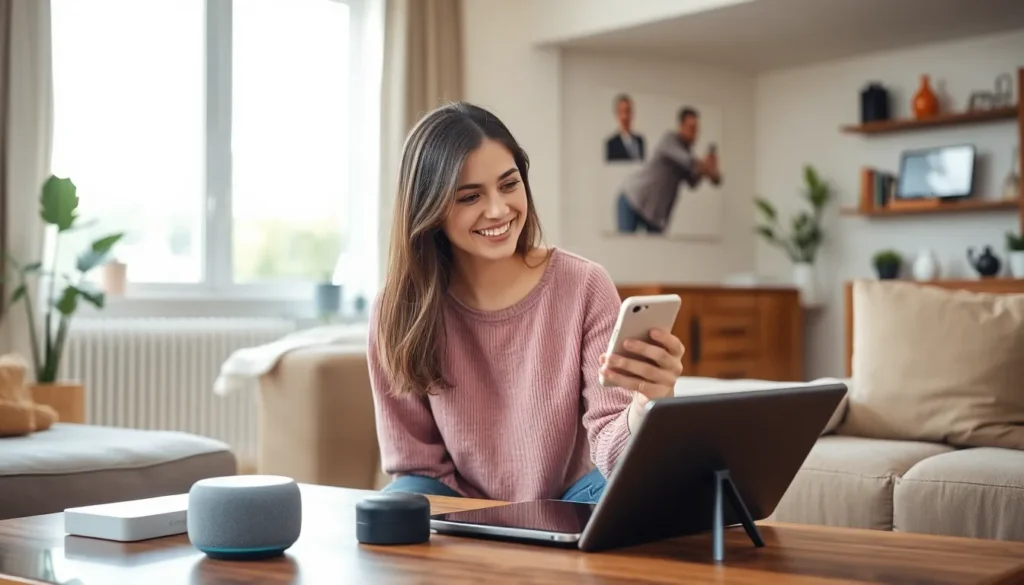
In a world where devices have more personalities than a reality TV show, phone ecosystem integration stands out as the unsung hero of tech harmony. Imagine a life where your phone, tablet, and smart home gadgets communicate like best friends at a coffee shop, effortlessly syncing your schedule, music, and even that pesky grocery list. Who knew that a little digital teamwork could turn chaos into calm?
Overview of Phone Ecosystem Integration
Phone ecosystem integration enhances the user experience by allowing devices to function together seamlessly. Users enjoy smoothly syncing schedules, sharing files, and managing tasks across multiple devices, including smartphones, tablets, and smart home gadgets. Smart home devices provide convenience, enabling users to control lighting and climate directly from their phones.
Ecosystem integration increases efficiency. For instance, integrated apps take the hassle out of grocery shopping by automatically updating lists and reminders across devices. It enhances collaboration as well. Users can easily share documents or media with family members, ensuring everyone stays informed and organized.
Security becomes a vital component as well. Integrated ecosystems often include advanced security measures, protecting sensitive data across devices. They allow users to manage devices from a central hub, improving oversight and control.
Compatibility plays a significant role. Many manufacturers focus on creating products that easily connect with each other, leading to wider adoption among users. Cross-platform functionality promotes less friction, making transitions between devices more natural.
Customer satisfaction rates increase with effective integration. Studies show that users who experience seamless interaction tend to feel more positive about their tech investments. Effective ecosystem integration not only improves daily routines but also transforms how people interact with technology, leading to a smoother, more organized lifestyle.
Benefits of Phone Ecosystem Integration

Phone ecosystem integration offers a range of advantages that enhance everyday digital life. Users experience a more harmonious interaction between their devices, leading to improved productivity and convenience.
Enhanced User Experience
A unified interface simplifies navigation across devices. Greater accessibility allows users to interact with their phone, tablet, and smart home gadgets without confusion. Synchronization of schedules means reminders appear on all devices, making planning more effective. File sharing becomes effortless with integrated applications, enabling users to send documents or photos instantly. Notifications from various apps converge into one seamless stream, ensuring users don’t miss important alerts.
Seamless Device Connectivity
Connecting multiple devices provides flexibility in managing daily tasks. Smart home systems enable remote control of household features directly from a smartphone. Instant access to music and media across devices enhances entertainment options significantly. Compatibility among various brands fosters innovation and expands consumers’ choices. Each device works together effortlessly to create a cohesive functioning ecosystem. Such effortless integration enhances overall satisfaction with technology, making daily routines smoother and more organized.
Key Elements of Phone Ecosystem Integration
Phone ecosystem integration relies on several key elements that enhance functionality and user experience. These elements create a cohesive environment across devices.
Cross-Platform Compatibility
Cross-platform compatibility ensures devices from different manufacturers communicate effectively. Manufacturers focus on interoperability, allowing smartphones, tablets, and laptops to work together seamlessly. Unified applications enhance user experience, letting individuals access content easily across devices. For instance, users can start a document on one device and finish it on another without any hassle. Connection standards like Bluetooth and Wi-Fi Direct facilitate quick data transfers.
Integration with Smart Home Devices
Integration with smart home devices elevates convenience for users. Smartphones serve as central controllers for devices like thermostats, lights, and security cameras. With compatible ecosystems, users can customize settings based on real-time conditions. For example, adjusting the thermostat or checking security cameras becomes straightforward through dedicated apps. Voice integration adds another layer, enabling hands-free control for many functions. Users benefit from increased responsiveness, allowing them to manage their home environment efficiently from anywhere.
Challenges in Phone Ecosystem Integration
Phone ecosystem integration presents several challenges that can hinder overall user experience. Addressing these issues is essential for maximizing the benefits of integration.
Privacy and Security Concerns
Privacy and security concerns frequently arise in integrated phone ecosystems. Users often worry about data breaches that could expose personal information from interconnected devices. Hackers may target entry points created by the integration, making security measures critical. Additionally, individual devices often have varied security standards, which can complicate the protection of sensitive information. Companies must prioritize robust encryption protocols and multi-factor authentication to safeguard user data across platforms. Users need to be vigilant regarding app permissions, ensuring they maintain control over their personal information.
Fragmentation of Services
Fragmentation of services remains another prominent challenge. Diverse ecosystems might lead to a lack of compatibility between applications, causing frustration for users. When devices do not communicate seamlessly, it hinders the overall efficiency of the integrated system. Service providers may focus on exclusive features, limiting interoperability with third-party applications. Additionally, constant updates from different manufacturers can create inconsistencies, making it hard for users to keep their systems aligned. To overcome this fragmentation, developers must prioritize creating universally compatible solutions that enhance user experiences across multiple devices and platforms.
Future Trends in Phone Ecosystem Integration
Emerging trends in phone ecosystem integration indicate significant advancements on the horizon. Enhanced technology intensifies the user experience, making devices more interconnected and user-friendly.
Advancements in Technology
Artificial intelligence continues to drive innovation, allowing devices to predict user needs better. Machine learning algorithms analyze user behavior, tailoring experiences to individual preferences. Enhanced processing power of smartphones leads to faster interactions, reducing latency in syncing data. Augmented reality offers new ways to visualize information, bridging gaps between physical and digital worlds. Companies are investing in 5G technology, which enables faster data transfers and improves communication between devices. This speed facilitates more seamless control over smart home features. As these technologies evolve, the integration of apps and features becomes more intuitive and effective.
Increasing Demand for Interoperability
User expectations shift as demand for cross-device compatibility increases. Enabling devices from various brands to communicate effectively simplifies user experiences. Consumers seek ecosystems that provide consistent functionality across applications, necessitating improvements in interoperability. Developers focus on creating solutions that address compatibility issues, ensuring users stay connected regardless of their device preferences. Collaborative efforts among manufacturers promote standards that enhance the integration process. Companies prioritize user-friendly experiences that operate smoothly, fostering customer loyalty. As users become more tech-savvy, their preference for integrated ecosystems reflects their expectations for a seamless, unified interface.
Phone ecosystem integration is reshaping how users interact with technology. By creating a cohesive network of devices, it simplifies daily tasks and enhances overall efficiency. The ability to control smart home features and access media seamlessly adds a layer of convenience that modern users crave.
As technology continues to advance, the potential for even greater integration becomes apparent. With a focus on interoperability and user-friendly solutions, the future promises to make these experiences even more intuitive. Prioritizing security and compatibility will be essential in fostering trust and satisfaction among users. Embracing these changes will not only elevate individual tech experiences but also cultivate a more organized and connected lifestyle.